Vegetable Upma
- Prep
- Cook
- Total
- Makes
- 3 servings
- Cuisine
- South Indian
- Level
- Easy
- Vegetarian
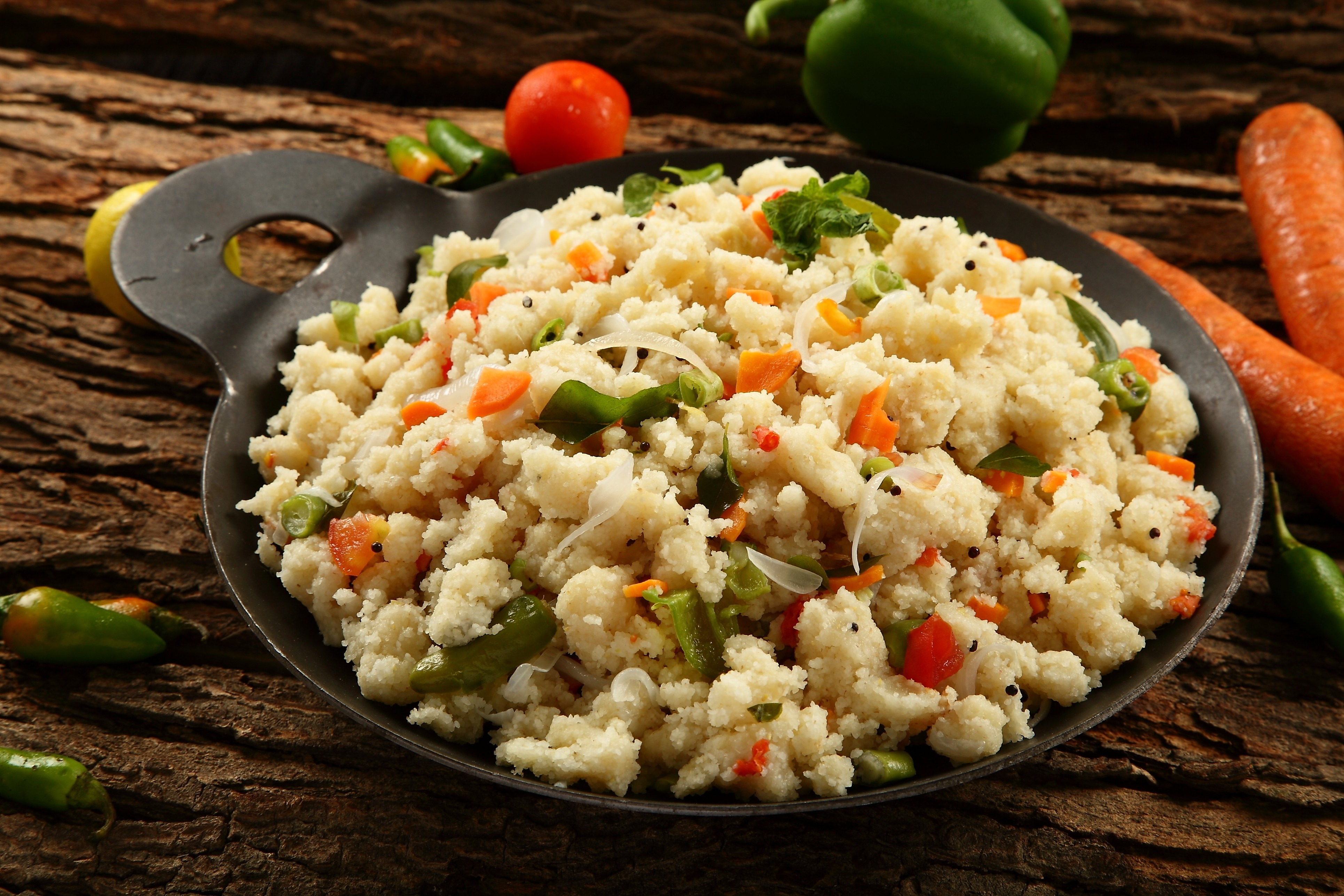
Upma lives or dies on two things: how well you roast the semolina and how much water you use. Get those right and you get separate, fluffy grains with vegetables running through them. Get them wrong and you get a paste.
Dry-roast the sooji first, over medium heat, until it smells faintly nutty and turns a shade darker — no oil, no shortcuts. Roasting drives off moisture and coats each grain so it hydrates evenly instead of clumping.
Then respect the ratio. One cup of semolina to two cups of water gives a firm, spoonable upma. Add the roasted sooji to boiling water in a thin stream while stirring hard in one direction, and it will not form lumps.
Ingredients
- 1 cup FarMart Pantry's Semolina (Sooji)
- 1 small carrot, finely chopped
- 1/4 cup green peas (fresh or frozen)
- 1 small onion, finely chopped
- 1 green chili, finely chopped (optional)
- 1/2 teaspoon mustard seeds
- 1/2 teaspoon urad dal (optional)
- 1 tablespoon oil or ghee
- 2 cups water
- Salt to taste
- Fresh coriander leaves for garnish
Instructions
- Dry roast the semolina in a pan over medium heat until it turns light golden. Remove and set aside.
- In the same pan, heat oil or ghee. Add mustard seeds and let them splutter.
- Add urad dal (if using) and sauté until golden.
- Add chopped onions and green chili. Sauté until onions are translucent.
- Add chopped carrots and green peas. Cook for a few minutes until vegetables are tender.
- Add water and salt. Bring to a boil.
- Gradually add the roasted semolina, stirring continuously to prevent lumps.
- Cook until the mixture thickens and the water is absorbed.
- Garnish with fresh coriander leaves and serve hot.
Tips for the best results
- Roast the semolina until it smells nutty but stays pale gold. Browning it turns the finished upma bitter.
- Boil the water fully before the sooji goes in. Lukewarm water is the most common cause of sticky upma.
- Add the sooji in a thin stream with one hand while stirring continuously with the other.
- Rest it covered off the heat for five minutes at the end. The grains finish swelling and separate as they sit.
- A teaspoon of ghee stirred in at the end keeps the grains loose and adds a lot of flavour for very little effort.
Variations
- Add a handful of roasted cashews with the mustard seeds for the classic tiffin-centre version.
- Finish with a squeeze of lemon and a teaspoon of grated coconut for a Karnataka-style upma.
- Swap in whatever is in the fridge — beans, capsicum, sweetcorn and cauliflower all work at the same stage as the carrot.
- For a higher-protein version, add a tablespoon of soaked moong dal along with the vegetables.
Storing and reheating
Upma keeps in the fridge for up to two days. It firms up considerably when cold — sprinkle over a tablespoon of water and steam or microwave it covered so it rehydrates rather than drying out. It does not freeze well.
What to serve it with
- Coconut chutney — the standard pairing, and worth making fresh
- A spoon of tangy tomato or onion chutney
- Plain curd and a wedge of lime for a lighter plate
Frequently asked questions
Why is my upma sticky?
Almost always too much water or under-roasted semolina. Stick to one cup of sooji to two cups of water, dry-roast the sooji until it smells nutty, and make sure the water is at a full boil before the sooji goes in.
Do I have to roast the semolina if the pack says pre-roasted?
Give it two or three minutes anyway. It drives off any moisture picked up in storage and makes a real difference to how separate the grains stay.
What is the correct water-to-sooji ratio for upma?
1:2 by volume for a firm, fluffy upma. Go to 1:2.5 if you prefer it softer and more porridge-like, which is common when cooking for young children.
Can I make upma without onion?
Yes. Leave the onion out and it stays a perfectly good upma — increase the ginger slightly and add a few curry leaves to make up the aromatics. This also makes it suitable for a satvik or Jain plate.
Is upma healthy?
It is a light, low-fat breakfast, and loading it with vegetables as this recipe does adds fibre and micronutrients. Semolina is a refined wheat product, so if you are managing blood sugar, pair it with curd or a protein side rather than eating it alone.